
Hydrilla
This submerged freshwater flowering plant is known as hydrilla to English speaking people. Its scientific name is the same through out the world - Hydrilla verticillata (Some botanists believe that are a number of Hydrilla species or subspecies, not just one.)
In some regions of the world, it is just part of the scenery; in other areas it is a serious, disruptive weed.
The Misplaced
Appearance
This plant is largely submerged and rooted in the bed of the water body.
The stems can grow up to 10m long.
The leaves are arranged in whorls of two to eight around the stem, each leaf can be up to 5–20mm long and up to 2mm broad, with serrations or small spines along the leaf margins
the leaf midrib is often reddish when fresh.
they have air spaces between the cells in the stems to keep them buoyant and upright.


Reproduction
Hydrilla reproduces in several ways:
sexually - It is monoecious (sometimes dioecious), with male and female flowers produced separately on a single plant; the flowers are small, with three sepals and three petals, the petals 3–5 mm long
asexually - through fragmentation (small fragments can grow into mature plants ). It also produces turions (over-wintering vegetative buds) in the axils of leaves, and tubers in the sediment.
Ecology and Distribution
Hydrilla‘s native range includes Australia, many Pacific Islands, and widespread locations throughout Asia. Disjunct localized populations occur in Africa and Europe.

This plant is tolerant of a wide range of environmental conditions and can be found in lakes, ponds, reservoirs, rivers, canals and ditches. It has low light requirements and thrives in both high and low-nutrient waters.
The Displaced
Hydrilla is invasive in some regions because it can displace native plants in the following ways
Rate of growth: One experiment established 30 cm tall plants took 8 days to reach the surface in 300 cm water depth, It outcompetes other plants in photosynthetic capabilities.
Rate of reproduction: One tuber can lead to the production of 5,000 new tubers per square metre. Also, tubers may remain dormant yet viable for many years in the sediments, giving them a way to come back after unfavourable seasons.
Physiological competitiveness
- It can grow at lower light intensities than many other plants. This makes it difficult to shade out, and allows it to grow for longer periods during the day.
- It can absorb carbon from the water more efficiently than other plants, so can continue to thrive during the summer when carbon can become more limiting.
- It can also store extra phosphorus, so when lack of this nutrient limits the growth of other plants, hydrilla can use what it has stored.
- It is tolerant of a wide range of water conditions, though water quality and sediment density can influence tuber production and growth.
- Forms dense vegetative mats which block light within water column, outcompetes native submersed vegetation.
As a result of these factors, the presence of hydrilla negatively impacts freshwater benthic biodiversity and community dynamics and requires repetitive, costly management statewide to maintain freshwater system functionality and accessibility.
Identifying the combinations of
- climatic factors (temperature, rainfall, photoperiod)
- environmental (water level, CO2, salinity, eutrophication)
- geographical (altitude, latitude)
- other factors (e.g. UV-B)
are needed in order to form efficient management strategies.


Case study - USA
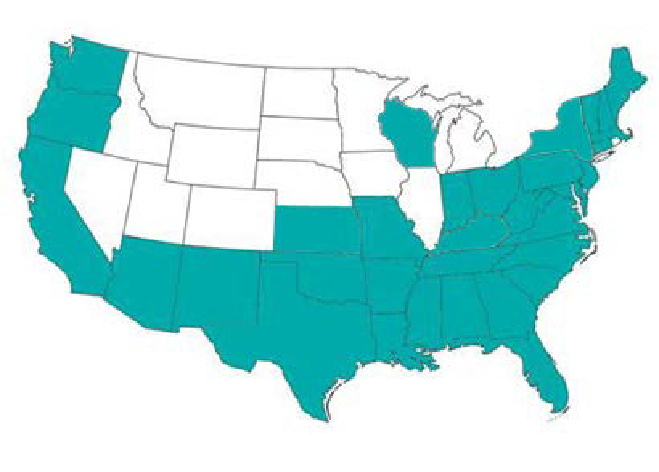
The US Department of Agriculture has listed hydrilla as a noxious weed. (https://nas.er.usgs.gov/queries/FactSheet.aspx?SpeciesID=6)
Hydrilla was first introduced into the United States in the 1950s and 1960s as a contaminant in commercially available waterlilies according to Ken Langeland in 1996. He named hydrilla as
the perfect aquatic weed ” based upon its reproductive, morphological plasticity, and physiological adaptations that allow this species to reproduce, spread, colonize, infest, and ultimately persist in a wide-range of aquatic habitats in many different environmental conditions.
Langeland, K.A. 1996. Hydrilla verticillata "The Perfect Aquatic
Weed". Castanea 61:293-304.

Consequences and Management
Prevention and education
Hydrilla is easily spread by anglers and recreational boaters. Hence it is imperative that boats and equipment get decontaminated before leaving a body of water to help prevent hydrilla from spreading to other aquatic systems.
Education about how to identify hydrilla and why it should be managed/eradicated is provided by state government authorities. surveys need to be carried out regularly to assess the efficacy of this training.
Mechanical removal
Because this plant spreads readily through fragmentation, mechanical controls such as cutting and harvesting should be used sparingly. It is sometimes used to for situations such as clearing boat lanes before a race.
Biological control
The generalist grass carp (Ctenopharyngodon idella), also known as the white amur, is used for hydrilla management in more than 50 countries. Only sterile fish are released in order prevent the carp numbers getting out of control and eating beneficial species. These fish are voracious consumers of hydrilla, but they are also generalists that will feed on a wide variety of aquatic species, including desirable native plants.
According to experts from the University of Florida
There are a number of host-specific biocontrol agents that cause varying levels of damage to hydrilla. Some, such as tip mining midges, stem weevils, and leaf mining flies, attack vegetative parts of the plant, while tuber weevils cause damage to its subterranean tubers . These insects do not provide a sufficient level of hydrilla control on their own, but they can be useful when used in conjunction with other control methods as part of an integrated pest management (IPM) program.
- https://ask.ifas.ufl.edu/publication/AG404
Chemical control
Certain herbicides are used to kill hydrilla. They are tested for suitability and regulated by state laws in the USA.
Hydrilla is best managed by a combination of strategies (Integrated Pest Management) best suited to specific regions.
Summary video
Note: This video has an emphasis on the state of New York, USA due to the authorities responsible for making it.
 Champions of hydrilla
Despite the emphasis on elimination of hydrilla, there are some people who want to promote the plant.
Aquarium enthusiasts praise it because it is easy to grow and often recommend it to beginners.
People who fish for bass are keen on it in lakes because the fish grow big on the ample feed.
As an abundant source of biomass, hydrilla is a known bioremediation hyperaccumulator of heavy metals such as mercury, cadmium, chromium and lead, and as such can be used in clean up water in contained circumstances.
Dig Deeper
- Non-native Invasive Freshwater Plants
- Hydrilla: Florida's Worst Submersed Weed
- Hydrilla (Hydrilla verticillata) Ecological Risk Screening Summary
- Hydrilla (Hydrilla verticillata)
- Hydrilla Infestations in Florida Freshwater Bodies: How Results from a Management Needs Assessment Survey Helped Developfrom a Management Needs Assessment Survey Helped Develop Suitable Information Delivery PlatformsSuitable Information Delivery Platform